Author: Adrianne

  • New Book! Rooted Calm 400 Affirmations

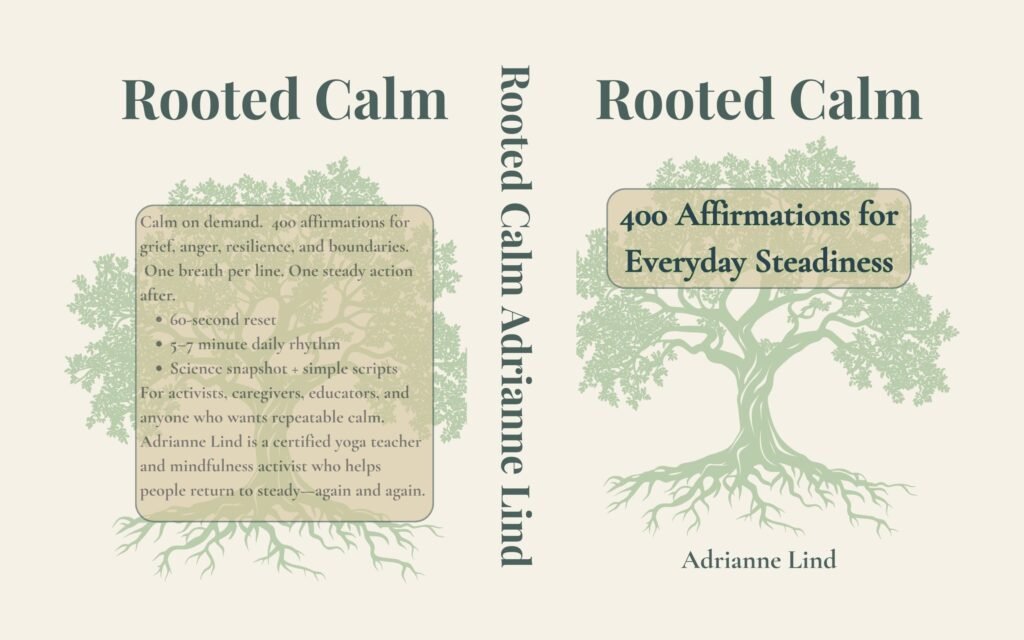
    New Book! Rooted Calm 400 Affirmations

    for Everyday Steadiness

    Calm on demand.
    One breath per line.
    One steady action after.

    What This Book Gives You

    • 400 concise affirmations for everyday steadiness
    • Four themed chapters: Grief, Anger, Resilience, Boundaries
    • A 60-second reset practice you can use anytime
    • A 5–7 minute rhythm for daily grounding

    Who Rooted Calm Is For

    • Activists, caregivers, educators, clinicians
    • Anyone who wants repeatable calm in under 5 minutes
    • Readers looking for practical tools for stress, grief, anger, and boundaries

    How to Use It

    • Pick one theme for the week
    • Read 3–5 lines aloud
    • Breathe 4 in / 6 out as you read
    • Take one small intentional action

    Practice at a Glance (60 Seconds)

    • 0–10s: Plant feet. Lengthen spine. Unclench jaw, hands, stomach
    • 10–25s: Exhale to empty. One round: inhale 4, exhale 6
    • 25–45s: Read one line slowly. Repeat once
    • 45–60s: Do one action—schedule, text, sip water, or step outside

    Why It Helps

    • Short, precise affirmations train attention and behavior
    • Pairing words with slow breathing supports nervous system regulation
    • Simple routines make calm, repeatable, and accessible

    Sample Affirmations from Rooted Calm

    • Grief: I let today be gentler
    • Grief: I take this breath and stay
    • Grief: I soften my pace
    • Anger: I lower my voice and hold the line
    • Anger: I pause before I act
    • Anger: I choose one clear sentence
    • Resilience: I take the smallest next step
    • Resilience: I log one win
    • Resilience: I return to steady sooner
    • Boundaries: I’m not available for that
    • Boundaries: I’ll reply tomorrow
    • Boundaries: I keep my word to myself

    Read It Anywhere

    • At your desk before a difficult call
    • In a parked car after tough news
    • Before sleep to reset your mind
    • Between meetings to stay grounded

    Formats Available

    • Paperback, eBook, and hardcover
    • Phone-friendly page design for reading on the go

    Get the Book

    Start Today

    • Read three lines aloud
    • Breathe 4/6
    • Take one steady step

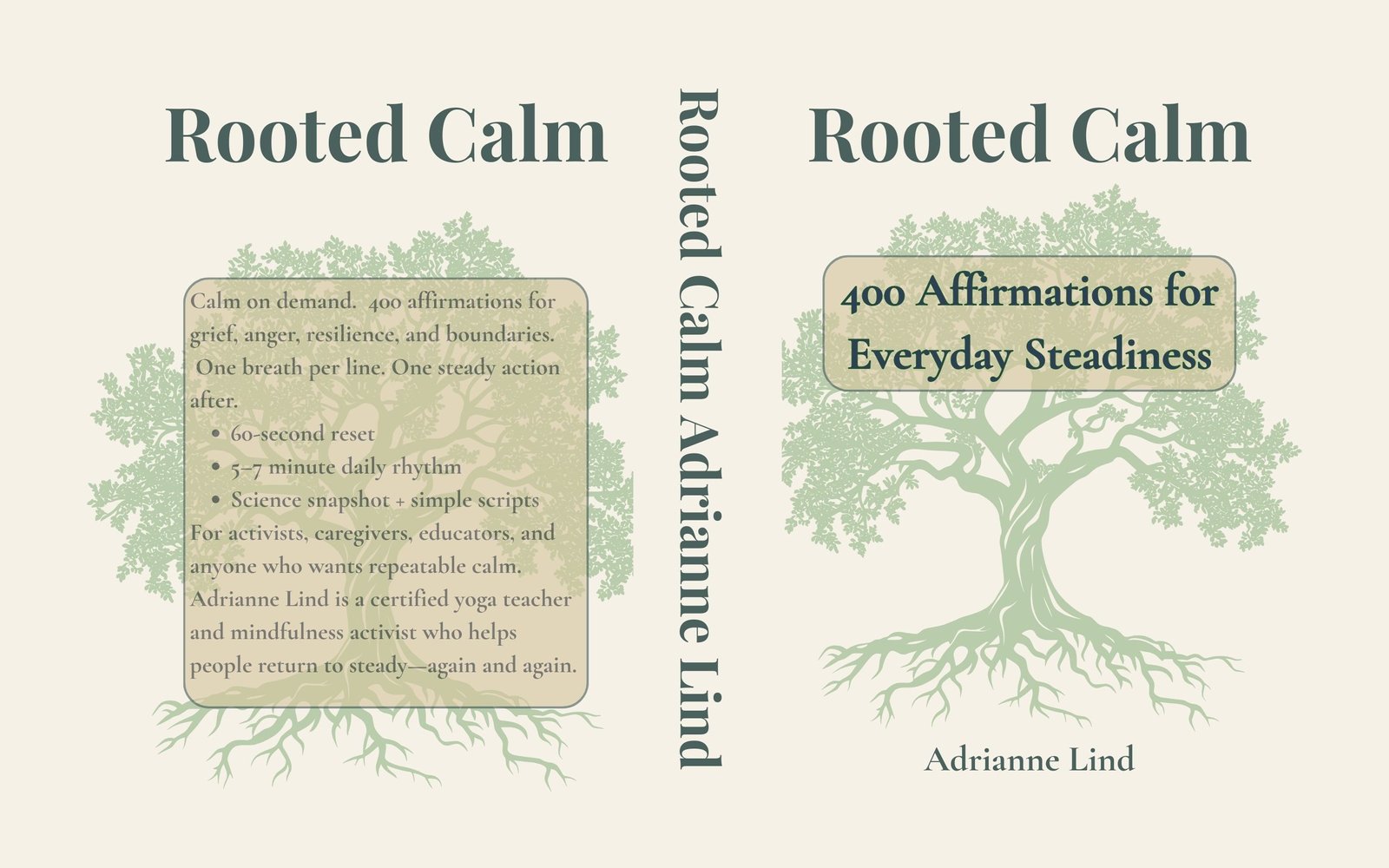
    Rooted Calm book cover - 400 Affirmations for Everyday Steadiness

    About the Author

    Adrianne Lind, author of Rooted Calm

    Adrianne Lind is a certified yoga teacher (MSc, MA, BA), mindfulness activist, author, and trauma-informed yoga guide. She helps people reclaim calm with practical, repeatable tools that fit real life—her methods, CALM, CARE, and ROOT, support nervous system regulation and everyday resilience.


    Stay Connected


  • E is for Embody — Live Your Calm, Daily

    E is for Embody — Live Your Calm, Daily

    The final step in the CARE Method is where everything integrates.

    E is for Embody — Live Your Calm, Daily

    E is for Embody.

    It’s not just what you do.
    It’s how you become.

    You’ve checked in.
    You’ve activated your tools.
    You’ve practiced new patterns.

    Now it’s time to embody calm, resilience, and choice—every single day.

    What It Means to Embody Calm

    • Showing up from steadiness, not stress
    • Making space for pleasure and rest without guilt
    • Trusting your body as a guide, not a burden
    • Building rhythms that support your nervous system

    Embodying calm means calm isn’t something you reach for in crisis.
    It becomes the foundation you live from.

    Daily Embodiment Practice

    Ask yourself:
    What’s one way I can embody calm today?

    • In the way you speak
    • In what you say yes (or no) to
    • Through how you move your body
    • By how you close your day with intention

    The CARE Method is more than a toolkit. It’s a way of being—rooted, present, and practiced.


    Try the 5-Day Calm Reset

    If you’re ready to practice embodiment with guidance, join the 5-Day Calm Reset.

    Each day includes simple movement or breath cues you can do anywhere—even in your chair.
    Start now—it’s free and powerful


  • R is for Repattern — Break the Default Loop

    R is for Repattern — Break the Default Loop

    Awareness and action are powerful.
    But real change happens when you do it consistently.

    R is for Repattern — Break the Default Loop

    R is for Repattern.

    This is the third step in the CARE Method—rewiring your nervous system through repetition and choice.

    Why Repatterning Matters

    We all have default responses:

    • People-pleasing
    • Avoidance
    • Control
    • Collapse

    These patterns aren’t flaws—they’re survival strategies. But with awareness and practice, you are allowed to choose differently. And with time, you can.

    Examples of Repatterning

    • Pausing before reacting
    • Choosing a boundary instead of burnout
    • Replacing harsh self-talk with curiosity
    • Resting before the crash

    Repetition, not perfection, creates change.

    Repatterning in Daily Life

    Try this today:

    • Notice one moment, you want to rush or avoid
    • Take one slow breath instead
    • Count it as a rep. That’s how change happens

    In the CARE Method, we practice new ways of being until they become who we are. Next: E is for Embody


    Join the 5-Day Calm Reset

    If you’re ready to repattern with guidance, join the 5-Day Calm Reset.

    Each day includes movement or breath cues you can do anywhere—even in your chair.
    Start now—it’s free and powerful


  • A is for Activate Your Tools — Don’t Just Know, Do

    A is for Activate Your Tools — Don’t Just Know, Do

    Once you’ve checked in, it’s time to respond.
    That’s where the second step of the CARE Method comes in.

    A is for Activate Your Tools — Don’t Just Know, Do

    A is for Activate Your Tools.

    You already have practices that calm you: breathwork, journaling, mindful movement, music, EFT tapping, and spending time in nature. The key is to use them—on purpose, in the moment they are needed most.

    Why Activating Your Tools Matters

    It’s not enough to know what helps you feel better. You need to practice it when it counts. This is how you interrupt stress spirals, shift old patterns, and reset your nervous system in real time.

    When you activate your tools, you send a signal of safety to your mind and body. Over time, this practice builds resilience and steadiness—even when life feels chaotic.

    Simple Practices to Activate Calm

    Try one of these short, repeatable grounding techniques today:

    • Breathe in for 4, exhale for 6 to reset your nervous system
    • Shake out your hands to release stored tension
    • Write one short sentence about what feels true right now
    • Tap gently on your heart and say: “I’m safe to slow down.”

    That’s activating. Simple. Intentional. Repeatable.

    What’s One Tool You Can Use Today?

    Ask yourself: Which practice can I reach for before the stress builds? The sooner you activate, the sooner you prevent overwhelm from taking over.

    CARE Method in Action.

    In the CARE Method, we don’t wait for calm to show up on its own. We create it. We practice calm in the middle of real life—at work, in parenting, in relationships, and in everyday stressors.

    Next step in the CARE framework: R is for Repattern.


    Start with the 5-Day Calm Reset.

    If you’re ready to try this with guidance, join the free 5-Day Calm Reset. Each day includes short, simple practices—breathwork, movement, or reflection—that you can do anywhere, even in your chair.

    Start now—it’s free and powerful


  • C is for Check In — Start Where You Are

    C is for Check In — Start Where You Are

    When life feels overwhelming, the first step is to pause and take a moment to check in. That’s where the CARE Method begins.

    C stands for Check In.

    This step in the CARE Method is more than asking yourself, “How are you?”. It’s about taking an honest look—without judgment—at what’s happening in your body, mind, emotions, and spirit. Checking in is the foundation of mindfulness and stress management.

    Why Checking In Matters for Stress Relief

    Most of us live in a constant state of survival mode. We override fatigue, suppress emotions, and ignore our own needs just to keep going. Over time, this leads to burnout, disconnection, and chronic stress. By pausing to check in, you create space to notice what’s real—so you can respond with clarity instead of reacting on autopilot.

    Simple Check-In Practice.

    Try this right now:

    • Take a slow, steady breath.
    • Ask yourself: What’s happening in my body right now?
    • Notice: Where is my attention?
    • Observe: What emotions are present?
    • Reflect: What do I need?

    These four questions build self-awareness. And without awareness, you can’t choose differently.

    How to Bring It Into Daily Life.

    Action step: Set a 2-minute timer today. Close your eyes, breathe, and ask: “Where am I right now?”. Write down the answer. That’s your starting point. It doesn’t need to be polished—it just needs to be true.

    Checking In Builds Emotional Resilience.

    The CARE Method isn’t about fixing yourself. It’s about listening. When you check in, you learn to meet your body and mind where they are instead of pushing past your limits. Over time, this consistent practice increases emotional resilience, supports nervous system regulation, and creates a foundation for calm in everyday life.

    Small check-ins can have a significant impact on your stress levels. Next step: A is for Activate Your Tools.


    Join the 5-Day Calm Reset.

    If you’re ready to deepen your practice, join the free 5-Day Calm Reset. Each day includes simple breathwork, movement, or journaling cues you can do anywhere—even in your chair.

    Start now—it’s free and powerful


  • M is for Move What You’re Holding

    M is for Move What You’re Holding

    Movement is How We Heal What Words Can’t Touch

    Sometimes you don’t need to talk it out; you need to move it out. The body keeps the score, and often stress, trauma, and unprocessed emotions get stored in muscles and tissues.

    Your body stores emotions in places like:

    • Clenched shoulders from constant tension
    • Tight hips from sitting and holding stress
    • Jaw pain or headaches from unspoken words

    When you move intentionally, you release more than stiffness. You clear emotional tension and reset your nervous system. This isn’t about burning calories—it’s about releasing stress and restoring balance.

    Simple Daily Practices to Release Stress

    Here are a few quick ways to begin moving what you’re holding:

    • Shake out your arms before bed to reset your body for rest
    • Do cat-cow stretches while seated to release spine and hip tension
    • Practice 2 minutes of alternate nostril breathing to balance energy and calm your mind
    • Take a mindful walk, swinging your arms freely to clear stress

    Small movements create powerful shifts. Even 1–2 minutes of intentional practice can reduce stress, improve mood, and increase resilience.

    Why Movement Supports Emotional Healing

    Movement regulates your nervous system. When you allow your body to express what words can’t, you build resilience and emotional steadiness. Over time, this consistent practice helps reduce anxiety, release stored emotions, and cultivate inner calm.


    Join the 5-Day Calm Reset.

    If you’re ready to release stress and embody calm, join the free 5-Day Calm Reset. Each day gives you a simple movement or breathwork cue you can do anywhere—even sitting in your chair.

    Start now—it’s free and powerful


  • L is for Let Go of What Doesn’t Serve

    L is for Let Go of What Doesn’t Serve

    Strong Women Let Go—Here’s Why That’s Radical

    The most powerful thing you can do in the face of stress might not be pushing harder. It might be releasing what no longer serves you. Letting go is not weakness—it’s wisdom. It creates space for calm, clarity, and growth.

    Letting go doesn’t mean failure. It means freedom.

    In my coaching work with women over 40, I see a repeating pattern: strong, capable women carrying outdated roles, habits, and obligations that drain their energy. They push through exhaustion, fueled by perfectionism and pressure. But the truth is, calm comes when you choose to set things down.

    Why Letting Go Matters

    Stress often builds because we hold on too tightly—to responsibilities, relationships, or expectations that weigh us down. Letting go creates room for rest, focus, and self-compassion. It is one of the most radical acts of self-care you can practice.

    Try This Journal Prompt

    Take 5 quiet minutes today and reflect:

    • What’s one habit, role, or obligation that drains your energy?
    • What would shift if you allowed yourself to release it?

    These questions bring awareness to what no longer fits. Awareness is the first step toward sustainable change.

    Letting Go is a Choice

    Letting go is not about quitting—it’s about choosing peace over perfection and rest over resentment. When you stop forcing what isn’t working, you make space for what truly supports your well-being.

    Next: M is for Move What You’re Holding – Rooted for Care


    Take the Next Step with the 5-Day Calm Reset

    In the 5-Day Calm Reset, I’ll guide you through simple practices that help you release what no longer serves you—without overhauling your entire life. Each day includes breathwork and mindful movement you can do anywhere, even in a chair.

    Join the free 5-Day Calm Reset today and start letting go with guidance.


  • A is for Awaken Awareness

    A is for Awaken Awareness

    Autopilot is Costing You Peace—Let’s Interrupt It

    If you’ve ever driven somewhere and realized you don’t remember how you got there, you know what autopilot feels like. It’s the state of moving through life unconsciously, without truly noticing what’s happening inside or around you.

    Most of us live this way. Constantly doing, responding, over-functioning—without pausing to check in. But autopilot comes at a cost: your peace, your clarity, and your energy.

    Why Awareness Matters

    Awareness interrupts the cycle. It’s not about meditation perfection—it’s about choosing presence. Awareness is pausing to notice what’s happening inside you, moment by moment. That pause is powerful: it creates space for choice, for calm, and for conscious living.

    Examples of Awareness in Action

    • “I’m clenching my jaw right now.”
    • “I notice I always say yes when I mean maybe.”
    • “I’m holding my breath in this meeting.”

    Each of these simple observations is an awareness shift. And every shift brings you closer to presence and choice. You can’t change what you don’t notice. But once you see, you’re no longer stuck.

    Next Step in the CARE Method

    Awareness is the first step of the CARE Method, a practical framework for calm and resilience. Once you awaken awareness, you can begin letting go of what no longer serves you. Next: L is for Let Go of What Doesn’t Serve – Rooted for Care


    Practice Awareness with the 5-Day Calm Reset.

    The 5-Day Calm Reset is designed to help you build awareness in real-time. Through simple breathwork and movement cues, you’ll learn how to notice tension, pause before reacting, and create calm on purpose.

    Awareness doesn’t take more time—it gives you back energy.

    Sign up today and start practicing awareness daily.


  • You Can Become Summit 4-7 August 2025

    You Can Become Summit 4-7 August 2025

    Join us for You Can Become

    A transformative summit designed exclusively for aspiring entrepreneurs and creatives ready to unlock their full potential! Whether you’re building your business, pursuing your passion, or seeking inspiration to elevate your journey, this free event offers powerful insights from successful entrepreneurs, storytellers, yoga teachers, and wellness experts.

    Whether you’re on vacation or working this summer, this summit helps you become your best self. After signing up, you’ll get purposeful emails—pinky promise, we won’t overload your inbox! Starting August 4th, each day features one email with exclusive content from three speakers, each offering a quick, hands-on experience. Plus, we have a big surprise in store—so open every mail! It’s free because you’re already VIP. Just one hour a day is all you need to level up your life. Invite your best friends and coworkers and enjoy a summit full of inspiration!

    Register here: https://stefanieheiderycb.de/summit/

    #becoming #womenssummit #summit

  • C is for Calm the Nervous System – The CALM Method

    C is for Calm the Nervous System – The CALM Method

    C is for Calm the Nervous System – The CALM Method

    Calm is a Biological State—Not Just a Mindset

    Most women are told to “just relax” without being given a real method to do so. But calm isn’t a personality trait—it’s the state of a regulated nervous system. When you understand this, you stop blaming yourself for being stressed and start working with your body to restore balance.

    Your nervous system controls how safe you feel in the world. It governs digestion, breath, emotions, and even thought patterns. When it’s dysregulated, you’re not simply “stressed”—you’re physically and emotionally out of sync.

    CALM Method Nervous System Regulation

    Signs of a Dysregulated Nervous System

    • Trouble sleeping
    • Racing thoughts
    • Emotional reactivity
    • Constant fatigue or irritability

    The antidote isn’t pushing harder or being more productive. The antidote is safety. You calm your nervous system by sending your body cues that it is safe to rest, breathe, and soften.

    How to Calm the Nervous System with the CALM Method

    • Practice slow breathing with extended exhales
    • Use micro-movements that signal ease, like rolling your shoulders
    • Engage in rhythm: rocking, tapping, or humming

    These small practices activate the vagus nerve—your body’s natural calming pathway—and help reset your nervous system to a more regulated state. Over time, they become powerful tools to build resilience and restore inner steadiness.

    Next: A is for Awaken Awareness


    Try the 5-Day Calm Reset

    If you want to experience this shift in your own body, I created the 5-Day Calm Reset. Each day gives you a short, simple practice—breathwork, micro-movements, or mindful pauses—to restore calm and balance.

    Join here – it’s free